Steradian Technologies takes pride in being the largest designer and manufacturer of competition-grade laser tag gear in the US. The company was founded not as a marketing or sales effort, but because two childhood friends with a passion for both invention and laser tag created technology so compelling, potential customers asked us to form a company. In this section, we’ll discuss some of the underlying thoughts and processes that go into developing, manufacturing, and (the part that’s most fun) testing our equipment.
We love talking about technology, so we’ll keep adding articles and notes to this section as we continue to work on new products.
Background
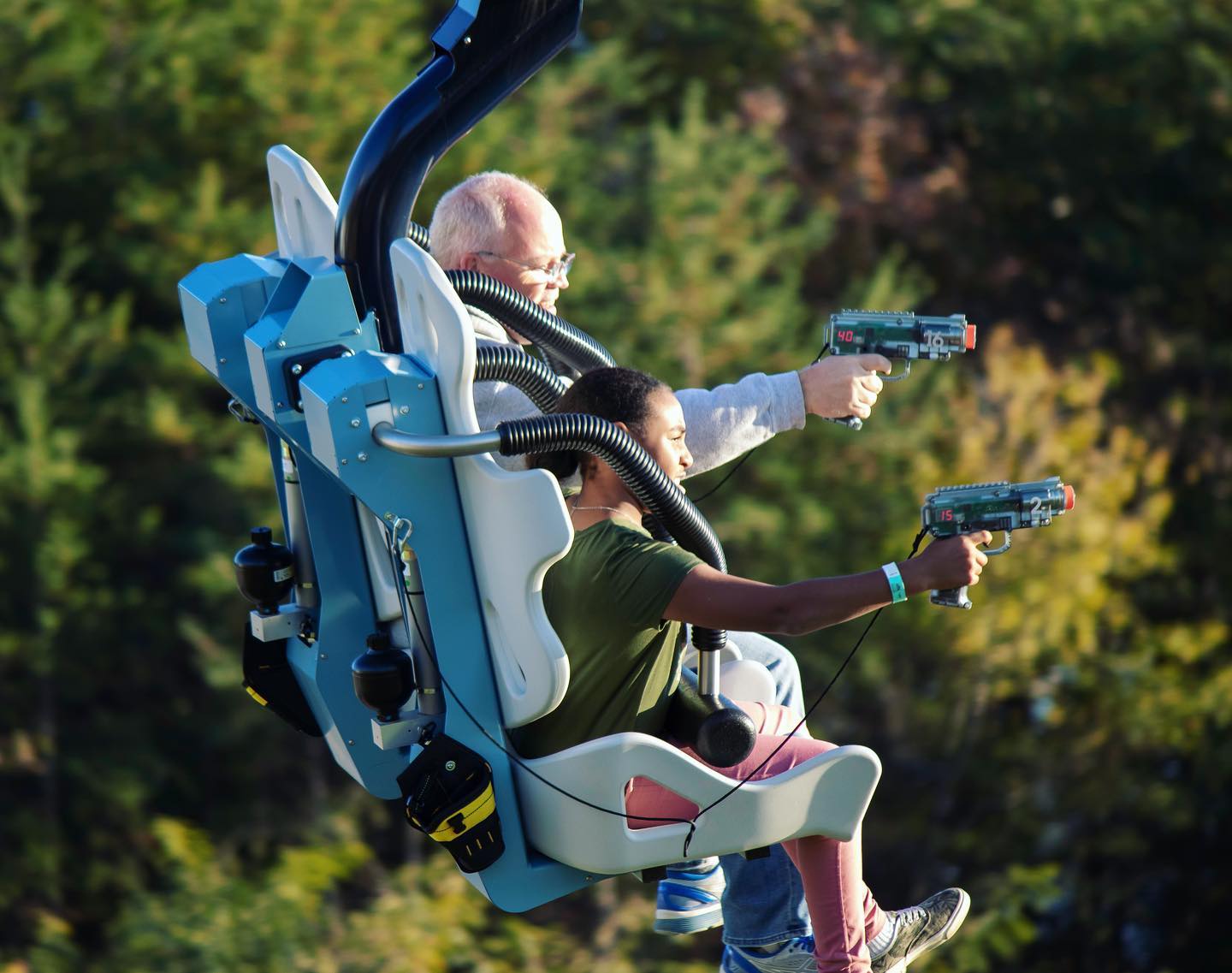
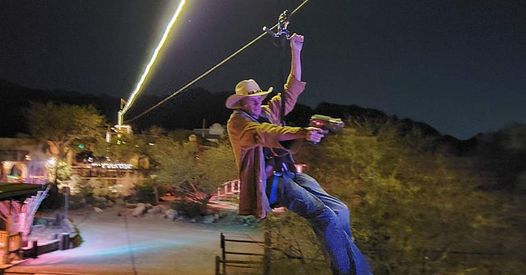
Our guiding principle when designing our equipment is that laser tag should be for EVERYONE. Kids, adults, families, hobbyists, and professionals should all be able to enjoy this sport. Thus, we make a conscious decision to avoid realistic-looking equipment (at least out of the box) and to focus on light weight, sturdiness, and ease of use. If both an eight-year old girl and an adult veteran of paintball or airsoft can have a great time playing with Steradian Laser Tag equipment, that’s a success for us.
The two gun body types currently used by Steradian are the product of several generations of gradual refinement and re-engineering, starting from the very first handmade prototypes used in the 1990s to test the then-new SunPlay technology. The early Steradian guns were in a small and sturdy pistol configuration, making the technology accessible to a broad audience. As the business grew in the early 2000s, it became clear that, even with a family-friendly focus, we wanted to provide more options, especially for customers interested in customizing and refitting their guns. The original polycarbonate pistol-style guns were refined into the current E400 series guns, and a new, high-end gun, the S-7, was designed to better cater to adults and enthusiast players.
S-7 Design and Construction
The S-7 body is milled from a solid block of aluminum using a CNC robot, resulting in an exceptionally sturdy, yet lightweight frame. The product of years of careful computer-aided design work, the frame is precisely cut to enclose and protect the internal mechanisms and electronics. The solid construction means that the S-7 does not dent or bend as sheet metal does; the S-7 resists impact well enough that it could probably be used as a light-duty hammer (please don’t use your S-7 as a hammer).
The S-7 body is painted using chemical powder coating, the same process used to apply color to power tools and automobile parts. The finish is quite scratch-resistant, and will look good for many years, even under heavy use.
The S-7 lens assembly is also made of machined aluminum, and serves to protect both the lens and the IR emitter LED. The assembly’s design is actually carried over from previous generations of Steradian guns. When designing the S-7, we saw no reason to change a lens design that worked perfectly, so we kept it. The new E400, on the other hand, didn’t need the lens assembly anymore, since the revised body design incorporated the lens right into the gun’s frame, so we saved several ounces of weight and made the gun even easier to carry.
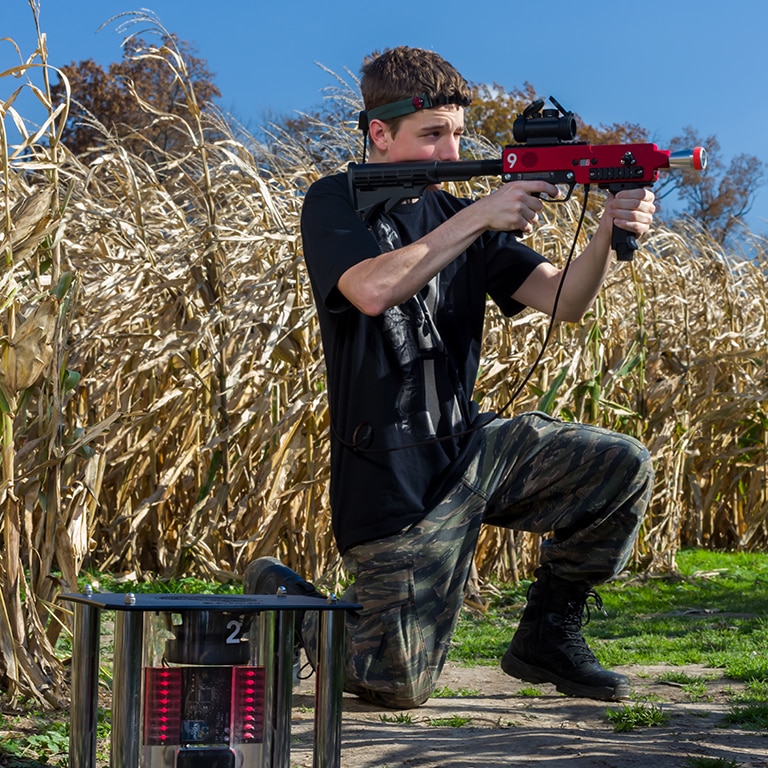
We wanted the S-7, our flagship product, to be modular and versatile. The addition of multiple Picatinny rails and a rear stock mount allowed users to customize their gun to their exact needs and preferences. We use actual Picatinny rails for the S-7, both for realism and durability. The rails are bolted to the frame so that they can be removed and replaced, if necessary. Any device that can be mounted to a Picatinny rail on a real firearm can be used on the S-7 (although we recommend against laser sights because of potential eye damage). Our local group of test players has found stocks, scopes, and handgrips to be most useful, as well as shoulder slings and flashlights.
E400 Design and Construction
The E400 body is molded in polycarbonate, a light and highly durable plastic. The transparent body helps maintain the E400’s family-friendly look and also allows certain components (like sensors and antennae) to be enclosed inside the body (making manufacturing easier and more efficient).
Despite the different construction materials, both the S-7 and E400 are sturdy enough to withstand several six-foot drops onto concrete without any damage. Both guns are designed with the minimum of parts necessary, which means fewer parts to wear out. If damage does occur, the guns are also built to be easily disassembled and repaired using basic tools. We’re confident enough in the protection provided by our gun frames that our emitters (the LED inside the barrel that projects the IR beam) are guaranteed for life.
SunBands
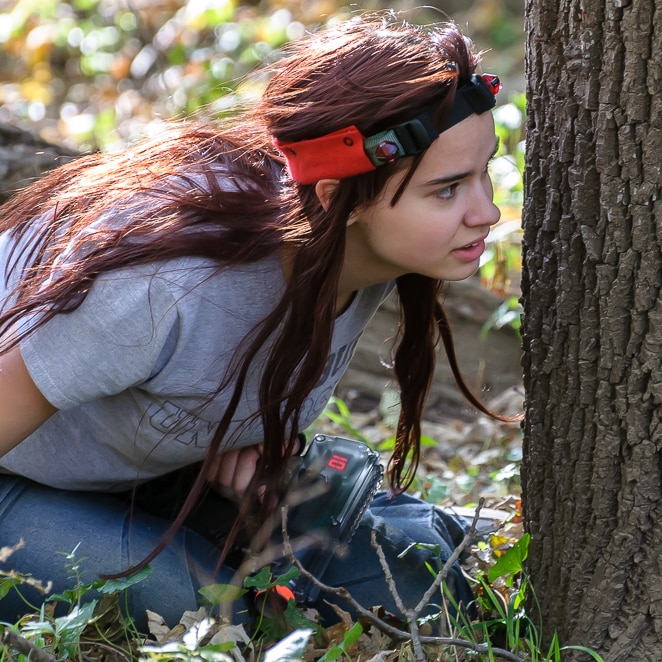
As with most of Steradian’s laser tag equipment, the SunBand was designed to make laser tag accessible and fun for players of all ages and playstyles, without ignoring the need for a reliable, competition-grade sensor system. The adjustable headband maximizes comfort, freedom of movement, and precision scoring. The SunBand’s three sensors are spaced around the headband to ensure 360-degree reception; fewer sensors would leave “dead zones” that players can exploit by, for example, simply turning their back to their opponent. Some laser tag systems use vests with front and back sensors. Steradian Technologies avoids vests for several reasons. First, it is virtually impossible to make a vest that fits both a young child and an adult; using headbands (which are easier to adjust for head size) allows for a one-size-fits-all design, reducing the equipment costs of running a game. Second, the arrangement of the sensors (one above each eye) ensures that even a cautious peek around a corner can result in being tagged. Finally, laser tag, like most active outdoor sports, can get messy. Not only do vests get muddy and covered in thistles and burrs, they also see a lot of physical abuse from their wearers diving for cover, sliding against trees, and rolling around on pavement. Vest repair and cleaning for an active outdoor laser tag player is time-consuming and expensive, and most operators would have to deal with a dozen or more vests.
The headband itself is made from nylon cloth, a common modern textile used in sportswear and safety gear. The Sunband is connected to the laser tag gun via a cable and electronics box. The electronics box is a small plastic box on the back of the headband; it weighs only a few grams and is highly impact-resistant.
The cable running between the SunBand and gun is actually quite easy to get used to, and does not, as some players worry, get in the way. The cable is fairly heavy-duty, rather like a good jumper cable, and does not easily catch on brush or rocks. When the gun is held normally, the cable runs from behind the player’s head, under the arm, and into the bottom of the gun. These are all areas that don’t see much impact in the course of daily activity, since most people don’t go around running into things with their armpits or the backs of their heads. Cable impacts are actually less likely during strenuous activity (like laser tag), because when under stress or while running, one’s natural instinct is to hunch down and protect the body and head…which is exactly why we put the cable there.